

Quick answer
You can reach Quilotoa from Quito by public bus in 3.5 to 4 hours with a transfer in Latacunga, by private vehicle in approximately 2.5 hours via direct highway route, or through a guided tour that includes round-trip transport and often combines the crater lake with stops at indigenous markets or highland viewpoints. Public buses require coordination between Quito-Latacunga and Latacunga-Quilotoa schedules, while private options eliminate transfers and allow flexible departure times.
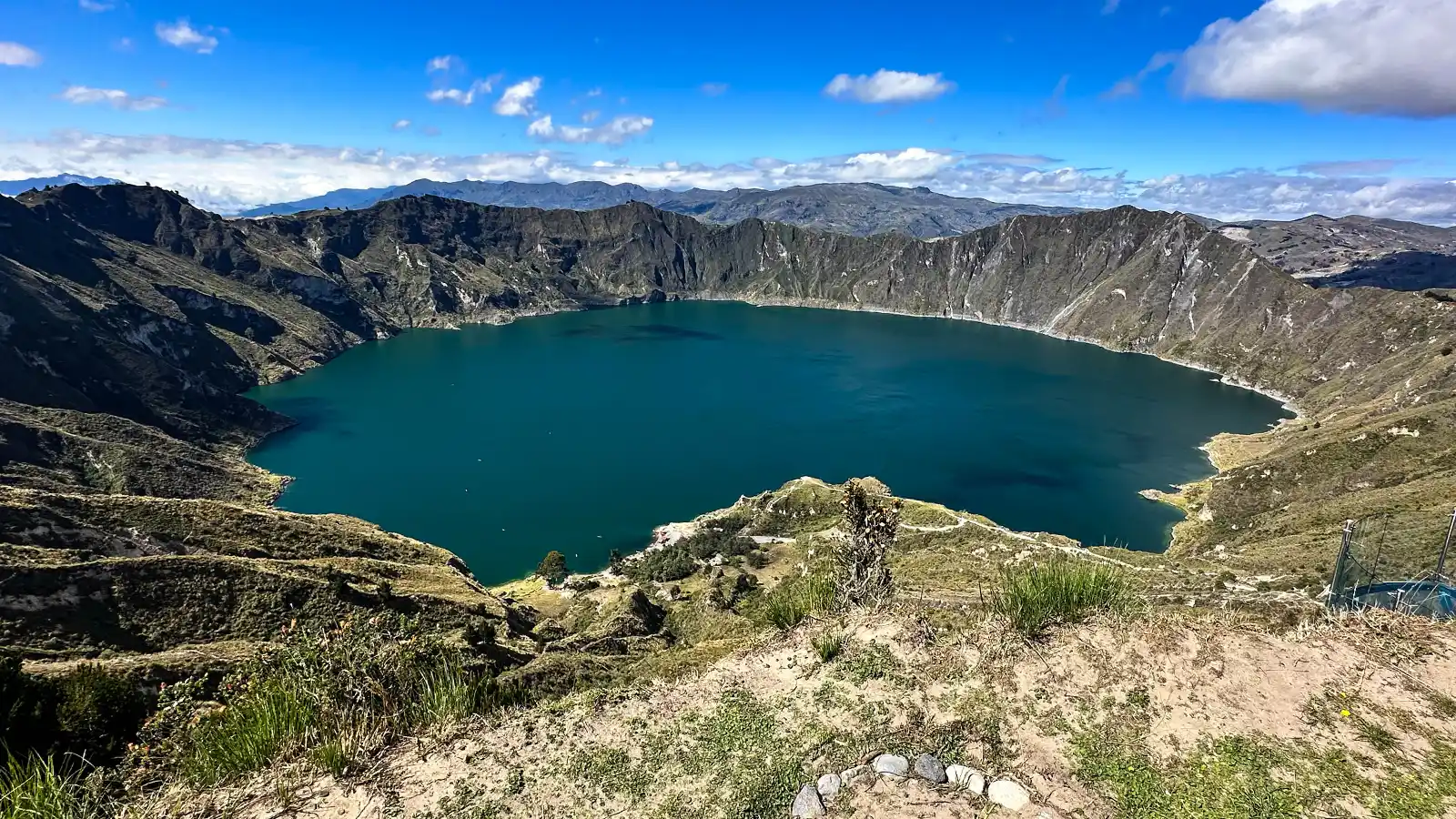
The road to Quilotoa cuts through some of Ecuador's highest and most remote terrain, and the logistics reflect that altitude and isolation. No direct public bus runs from Quito to the crater rim. Instead, travelers heading to Quilotoa from Quito by public transit take an intercity bus south to Latacunga, then connect to a smaller rural bus or shared truck that climbs the final 60 kilometers into the mountains. The two-stage journey is inexpensive and culturally immersive, but schedules are sparse and the transfer window in Latacunga can stretch tight if buses run late. Private transport collapses the route into a single push along the E35 Panamericana and then east onto secondary paved roads that wind through high-altitude farmland. The drive takes roughly two and a half hours without stops, and the controlled pace makes altitude acclimatization easier for those coming from sea level or lower elevations. Organized day tours bundle the transfer with a guide, entrance coordination, and sometimes a loop through Tigua or Zumbahua market, turning the crater visit into a structured narrative rather than a solo navigation exercise. The final approach to the village of Quilotoa climbs sharply, and the last five kilometers gain nearly 400 meters in elevation. Buses and vans navigate steep hairpin turns carved into volcanic slopes, and the road surface can be rough after rain. The village itself is small, with most services clustered near the crater overlook. Arriving during the recommended morning window ensures clearer skies over the caldera and aligns with both bus schedules and tour itineraries, which typically depart Quito between 6:00 and 8:00 to reach the crater by mid-morning. Deciding how to get to Quilotoa from Quito comes down to budget, comfort with independent travel, and how much time you want to spend in transit versus at the rim. Public buses cost a fraction of private options but require early starts, patience with rural schedules, and Spanish sufficient to confirm connections. Private transfers and guided tours trade cost for convenience and control, eliminating the risk of missed connections and allowing same-day return to Quito without the stress of catching the last bus down the mountain.
“The two-stage public bus journey is inexpensive and culturally immersive, but schedules are sparse and the transfer window in Latacunga can stretch tight if buses run late.”
Public Transit vs. Private Transport: How to Get to Quilotoa From Quito
Travelers deciding how to reach Quilotoa from Quito must weigh the autonomy and lower cost of public buses against the speed and convenience of private transport. This comparison outlines the logistical trade-offs for each method.
| Public Bus Budget Travelers |
Top pick Private Transport Convenience Seekers |
|
|---|---|---|
| Cost | Low | High |
| Flexibility | Limited to fixed schedules | High custom scheduling |
| Travel Time | 4.5–6 hours | 3–4 hours |
| Effort Level | High involving multiple transfers | Low door-to-door service |
| Reliability | Dependent on local connections | High private vehicle availability |
Verdict: Choose public transit for maximum savings if you have extra time, or opt for private transport to maximize your time at the caldera and reduce transit complexity.
Step-by-Step Directions on How to Get to Quilotoa From Quito
The Quilotoa Lagoon is located in the Cotopaxi Province, accessible by traveling south from Quito via the Pan-American Highway (E35). The journey typically requires a connection in the city of Latacunga before reaching the caldera.
Quito (Terminal Terrestre Quitumbe) to Latacunga Terminal
Latacunga Terminal to Quilotoa village
E35 highway from Quito to Latacunga, then via Pujilí to Quilotoa
Best Time of Day and Year for How to Get to Quilotoa From Quito
The best arrival window for Quilotoa is 08:00–11:00. This early timeframe offers clearer light and higher visibility before afternoon clouds and mist typically settle over the caldera.
June to August
High volume of travelersDry and sunny, 10°C to 18°C
These months offer the most stable weather, though weekends draw larger crowds.
September to November
Moderate to low crowdsVariable, 8°C to 16°C
This period provides a balance of fewer visitors and manageable precipitation.
December to May
Fewer visitorsRainy and misty, 7°C to 15°C
Expect frequent afternoon clouds and limited visibility during the wetter months.
Weekday mornings
Minimal foot traffic—
Arriving during a weekday morning provides the best opportunity to experience the lagoon in relative solitude.
Verdict: For the best balance of visibility and crowd management, plan your visit for a weekday between 08:00 and 11:00 during the months of April or October.
Opening Hours for How to Get to Quilotoa From Quito
The Quilotoa Lagoon access point maintains consistent daily operating hours for all visitors. The site is open every day of the week to accommodate those traveling from Quito.
| Monday | 08:00–17:00 | |
|---|---|---|
| Tuesday | 08:00–17:00 | |
| Wednesday | 08:00–17:00 | |
| Thursday | 08:00–17:00 | |
| Friday | 08:00–17:00 | |
| Saturday | 08:00–17:00 | |
| Sunday | 08:00–17:00 |
Preparation Checklist for How to Get to Quilotoa From Quito
Pack for high altitude and rapidly changing mountain weather.
-
Bring layers and a windproof jacket — Temperatures drop sharply at 3,914 meters, especially in afternoon clouds.
-
Wear broken-in hiking boots or trail shoes — The crater rim path is uneven gravel and can be slippery after rain.
-
Pack sunscreen, sunglasses, and a hat — UV exposure intensifies at altitude; clouds break unexpectedly.
-
Carry water and high-energy snacks — Limited food options at the lagoon; altitude increases dehydration.
-
Have small bills for the entrance fee — The 2 USD community fee is collected at the village checkpoint in cash.
-
Charge your phone and camera fully — Cold drains batteries faster; no charging stations at the rim.
Check availability
Frequently asked questions about how to get to quilotoa from quito
Everything you need to know about how to get to quilotoa from quito